
A different vision for the life of barrels.
Since 2009, TEDEM has developed its craft around one conviction: wood deserves to be preserved, understood and valued over time.
The limits of shaving the wood opened a new path.
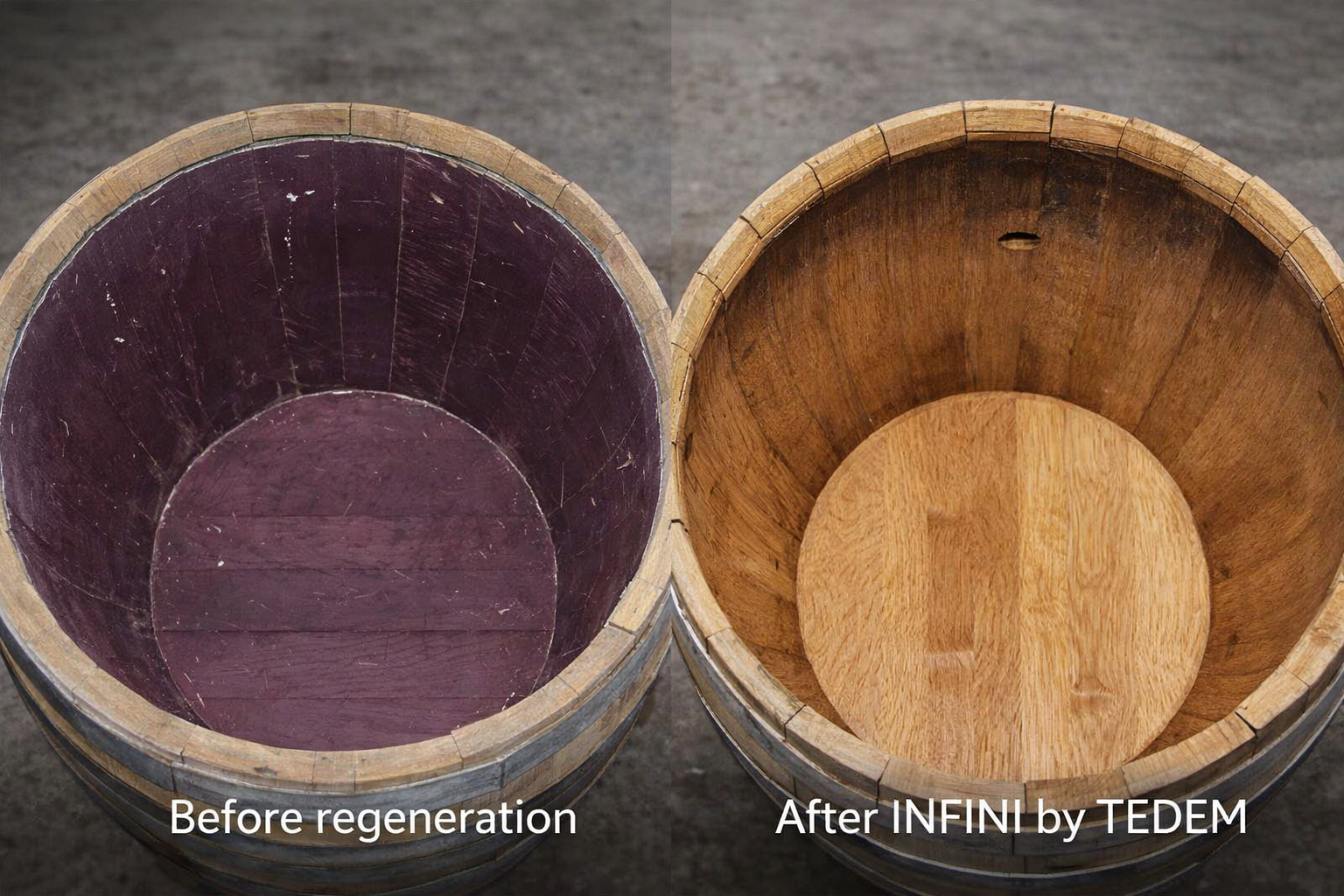
TEDEM began with traditional barrel renovation methods. Workshop experience quickly revealed their limits: material removal, drying of the wood, leakage risks and difficulty preserving the cask’s original profile.
These observations led the company to seek a different approach. The objective was no longer simply to renovate a barrel, but to extend its life without sacrificing its structure.
A journey shaped by experimentation.
TEDEM cooperage is founded
The activity begins with traditional barrel renovation. Daily workshop experience drives the first ideas about preserving wood.
Development of infrared toasting
TEDEM works on technology providing more precise thermal control and controlled direction of toasting profiles.
Research sur la thermo-oxydation
Research begins on a no-shaving regeneration method designed to overcome the limits observed with mechanical wood removal.
Patent filing and initial commercial development
The process enters a new phase, supported by analysis and continuous improvement.
Transition to an automated facility
Investment in dedicated equipment strengthens the precision and reproducibility of regeneration cycles.
A new facility and professional recognition
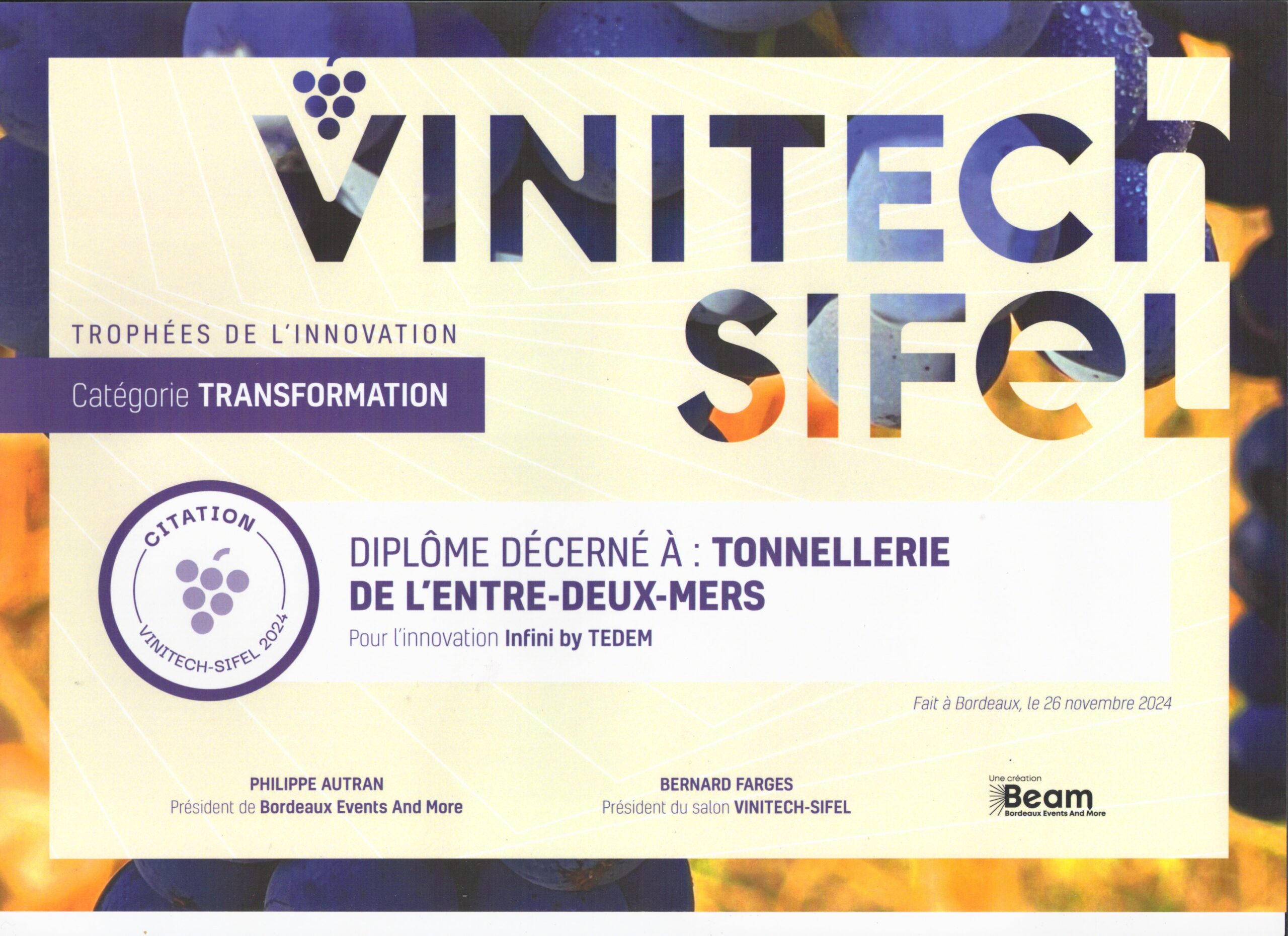
TEDEM moves to a dedicated facility in Sauveterre-de-Guyenne. The INFINI by TEDEM method obtains its European patent and receives a distinction at the 2024 Vinitech-Sifel Innovation Trophy in the Transformation category.
Continuing to understand wood
Research continues into regeneration, oenological tannin finishes, infrared toasting and the control of environmental impacts.
Extend the life of barrels that deserve to last.
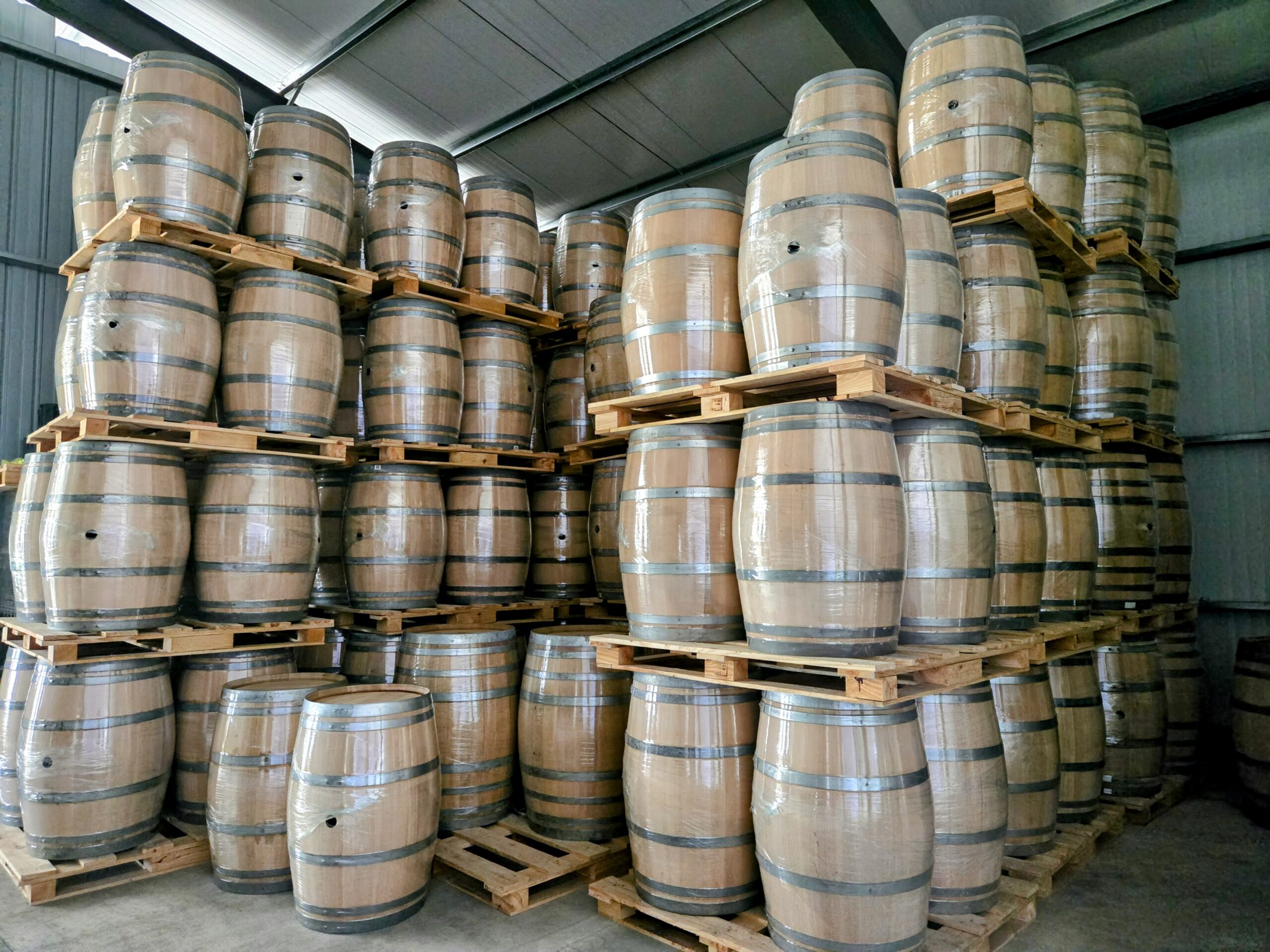
A fine barrel represents oak, time, cooperage expertise and the history of the ageing cycles it has held.
TEDEM’s mission is to preserve this value when further use remains possible. Regeneration then becomes a tool serving the cellar, the product and the cooper’s original work.
- Value what already exists
- Preserve a valuable resource
- Reduce systematic replacement
- Pursue reproducible quality
Performance must also reduce impact.
The Sauveterre-de-Guyenne facility notably uses biomass-generated steam and a water recovery approach.
These choices extend the logic of the process itself: preserve more, reduce waste and progressively improve the production facility.
It is written with the barrels you entrust to us.
Tell us about your batch and the next ageing cycle you are preparing.
Talk to TEDEM